The Weeds Your Grandmother Knew: 7 Backyard Plants With Surprising Wellness Credentials
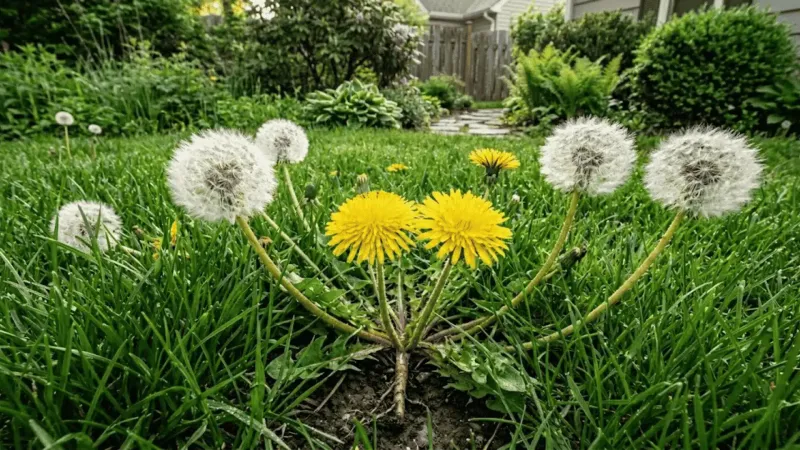
Photo: dandelion and plantain weeds growing in sunny backyard lawn close up, via randylemmon.com
There's a certain irony in spending $40 on herbal supplements while spraying weed killer on plants that herbalists have prized for centuries. Before the era of drive-thru pharmacies, most families had a garden that doubled as a medicine chest — and a surprising number of those plants are probably growing in your yard right now, free of charge.
Let's be clear up front: this isn't a pitch to ditch your doctor. But for everyday minor complaints — an itchy bug bite, a scratchy throat, a rough night's sleep — some of these humble plants have both traditional track records and modern research behind them.
1. Dandelion (Taraxacum officinale)
The most maligned plant in American lawns is also one of the most nutritious. Every part is edible: young leaves in spring salads (they're loaded with vitamins A and K), the roots roasted and brewed as a coffee substitute, the flowers for dandelion wine if you're feeling ambitious.
Traditional use: A gentle liver and digestive tonic, and a mild diuretic.
Try this: Steep fresh or dried dandelion root in hot water for 10 minutes for an earthy, slightly bitter tea.
Safety note: Skip it if you're on blood thinners, diuretics, or lithium, and avoid foraging from lawns treated with pesticides.
2. Plantain Leaf (Plantago major)
Not the banana-like fruit — this is the low-growing, ribbed-leaf weed that pops up in sidewalk cracks. It's the classic folk remedy for bug bites and stings.
Try this: Chew a clean leaf (if you've positively identified it) or crush it and apply the juice directly to a mosquito bite. Or make a poultice: mash fresh leaves with a little water, spread on gauze, and tape it over the bite.
Old-timers called it "nature's bandage," and honestly, that's a pretty fair description.
3. Aloe Vera
The one plant on this list you probably already own. That gel inside the leaves is genuinely effective for minor sunburns and kitchen burns — studies support its soothing, hydrating effect on superficial burns.
Try this: Cut a mature outer leaf, let the yellow latex drain out (it can irritate skin), then scoop the clear gel. Store it in the fridge for extra cooling relief.
When to see a doctor: Burns larger than your palm, on your face, or that blister badly.
4. Mint (Mentha)
Peppermint and spearmint are nearly impossible to kill, which is great news for tea drinkers. Menthol genuinely helps open congested airways and eases the feeling of an upset stomach.
Try this: Crush a handful of fresh leaves, steep in just-boiled water for five minutes, and sip slowly. Add honey if your throat is scratchy.
Caveat: Mint can worsen acid reflux for some people, so if heartburn is your issue, this might not be your herb.
5. Calendula (Calendula officinalis)
Those cheerful orange pot marigolds aren't just pretty. Calendula has real anti-inflammatory properties, and it's a staple in natural skin care for a reason.
Try this: Infuse dried petals in olive oil on a sunny windowsill for two weeks, then combine with a little beeswax to make a simple healing salve for dry, cracked hands and minor irritations.
6. Chamomile (Matricaria chamomilla)
The sleepy-time classic. Chamomile tea has been used for centuries as a mild relaxant, and small studies back its calming effect and its usefulness for mild sleep trouble.
Try this: Steep dried (or fresh) flowers for five minutes, cover your cup while it steeps to keep the volatile oils in, and drink it as part of a wind-down routine about an hour before bed.
Note: If you're allergic to ragweed, test carefully — they're related.
7. Yarrow (Achillea millefolium)
The feathery-leaved wildflower with white flower clusters has a long history — legend says Achilles used it on his soldiers' wounds, hence the name.
Traditional use: Styptic (it helps minor cuts stop bleeding) and a traditional fever tea.
Try this: Crushed fresh leaves applied to a small nick can help slow minor bleeding. Dried yarrow makes a pungent but effective tea.
Caution: Avoid if pregnant or breastfeeding.
The Honest Fine Print
A few ground rules before you start foraging:
- Identification is everything. Use a quality field guide or app, and when in doubt, don't. Some plants have dangerous look-alikes.
- Location matters. Roadsides, treated lawns, and drainage areas can carry pesticides and runoff. Your own untreated yard is best.
- Start small. Even benign plants can cause reactions. Try a little and wait.
- Know the limits. A dandelion tea won't fix a fever that won't break, an infection, or anything that's getting worse instead of better. Persistent symptoms, difficulty breathing, deep wounds, or anything involving a child under two means it's time for a real doctor, not a poultice.
Think of your backyard as a supplement to your medicine cabinet, not a replacement. Your grandparents knew that too — they just also knew which weed to grab when the pharmacy was a day's wagon ride away.