Dinner's Done, but Your Kitchen Thinks It's Noon: The Lighting Swap That Helps Your Brain Wind Down
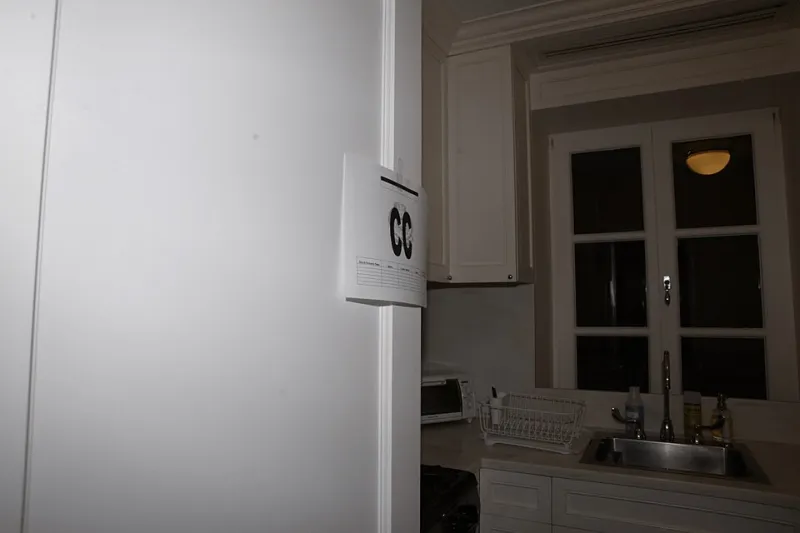
Photo: Federal Bureau of Investigation, Public domain, via Wikimedia Commons
You finished dinner, the dishes are loaded, and you're just puttering around the kitchen — wiping counters, packing lunch, grabbing a glass of water. So why does your body still feel like it's mid-morning?
Look up. That's probably your answer.
Most American kitchens — especially the open-plan layouts that dominate homes built or renovated in the last 20 years — are lit like an operating room. Six recessed can lights, each pushing bright, blue-heavy white light across 300 square feet of living space, well past sunset. Your brain doesn't know it's evening. As far as it's concerned, the sun never went down.
What That Overhead Glow Is Actually Doing
Your sleep timing is governed largely by melatonin, a hormone your pineal gland releases as darkness falls. Specialized cells in your eyes — the ones that handle circadian timing, not vision — are extremely sensitive to light in the blue range, which is exactly where most cool-white LED bulbs and fluorescent tubes punch hardest.
When those cells detect blue-heavy light in the evening, they send the message: daytime. Stay alert. Suppress melatonin. Research on evening light exposure has repeatedly shown delayed melatonin onset and reduced sleepiness in the hours before bed.
And here's the kicker: you don't need to be staring at the light for this to happen. Simply existing in a brightly lit kitchen for two hours after sunset is enough to shift your internal clock. We talk a lot about phone screens wrecking sleep, but your ceiling fixtures can outshine your phone by a mile in total light output.
The Downgrade That Actually Upgrades Your Evenings
The fix isn't sitting in the dark eating dinner by candlelight. It's a deliberate evening "downgrade" — dropping your light levels and warming the color as the night goes on. Think of it like a dimmer switch for your entire evening.
1. Swap your most-used bulbs to warm white (2700K or lower). That number on the package is color temperature. Anything 3000K and above leans blue; 2700K and below gives you that cozy, amber glow. You don't need to rewire anything — just replace the bulbs in the fixtures you use after 6 p.m. A four-pack of warm LEDs runs about $10 at any hardware store.
2. Kill the overheads after dinner. Recessed can lights are the biggest offenders because they blast light downward from directly above eye level. After dinner, flip them off and rely on lamps instead.
3. Move your light low and to the sides. Melatonin suppression is driven by light hitting the back of your eye. Overhead and front-facing light does the most damage; light from table lamps and floor lamps placed to the side — at or below eye level — is far gentler. A $15 plug-in dimmer cord lets you dial any existing lamp down for the last hour of the night.
4. Save the brightest light for the morning. This is the other half of the deal. Bright, cool light shortly after waking anchors your rhythm just as surely as dim evenings do. If you can, open the blinds with your coffee or eat breakfast near a window. Bright mornings plus dim evenings is the combination that actually retrain your clock.
Your Two-Week Experiment
Here's a simple way to test whether your kitchen lighting is genuinely part of your sleep problem. Grab a notebook or use your phone's notes app and track three things each day: what time you felt sleepy, roughly how long it took you to fall asleep, and how groggy you felt waking up (rate it 1–5).
- Days 1–3: Keep everything exactly as is. This is your baseline.
- Days 4–14: From 6 p.m. onward, run the downgrade — warm bulbs, overheads off, lamps on, dimmers low. After 9 p.m., treat bright light like caffeine: avoid it.
Most people notice the shift somewhere in the second week — that sleepy feeling arriving a little earlier, scrolling in bed turning into dozing off instead. If nothing changes after two honest weeks, your lighting probably wasn't the culprit, and it's worth looking at caffeine timing or evening screen habits instead.
One Last Thing
You don't need smart bulbs, an app, or a $200 lighting system. The whole setup — a few warm bulbs, one dimmer cord, and a lamp or two repositioned — usually costs less than a nice dinner out. And unlike a new mattress or a fancy supplement, it's a change you'll feel the very first night you flip those ceiling lights off and let your kitchen finally agree with the sunset.