Ten Minutes to Better Sleep: The Bedroom Reset You Can Start Tonight
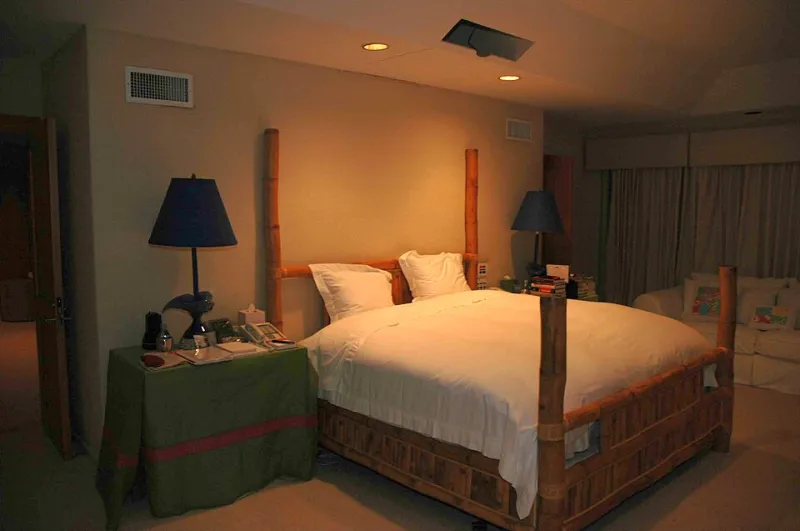
Photo: Palm Beach Police Department, Public domain, via Wikimedia Commons
You've probably heard a hundred times that sleep matters. What gets less airtime is this: your bedroom environment is quietly coaching your brain on whether to wind down or stay on alert. The good news? You don't need a $400 weighted blanket or a smart mattress to fix it. You need about ten minutes and a few things you already own.
Here's the reset, step by step.
Minute 1–3: Clear the Nightstand Clutter
Look at what's actually on your nightstand right now. Charging cables, yesterday's coffee mug, three unread books, a receipt, maybe a bottle of vitamins. Every item is a tiny signal to your brain that there's still stuff to process.
Sleep researchers call this "cognitive arousal"—low-grade mental noise that keeps your nervous system from fully downshifting. Clear it all off. Keep only what you'll genuinely use overnight: a lamp, a book, a glass of water, your phone (more on that below).
Make it a habit: A small tray or basket on the shelf below works wonders for corralling the clutter that migrates back.
Minute 4–5: Drop the Thermostat
Here's one of the most overlooked sleep hacks in America, especially if you live somewhere hot like Texas or Florida where the AC runs all summer: your body needs to cool down to fall asleep.
Your core temperature naturally dips as you drift off, and a warm room fights that process. Most sleep experts recommend keeping the bedroom somewhere between 60 and 68 degrees Fahrenheit. If you're waking up sweaty at 3 a.m., this is probably why.
No thermostat control? Crack a window, swap in lighter bedding, or flip your pillow to the cool side (repeatedly—we won't judge).
Minute 6–7: Mix Up a DIY Linen Spray
This is the fun part, and it costs about a dollar. Lavender in particular has some decent research behind it—small studies suggest its scent may help people fall asleep faster and sleep more soundly.
What you need:
- A small spray bottle (dollar stores carry them)
- 2 tablespoons of witch hazel or vodka
- 10–15 drops of lavender essential oil
- Half a cup of water
Shake it up and lightly mist your pillow and top sheet about 20 minutes before bed. The scent becomes a cue—your brain starts associating lavender with sleepiness the same way it associates your morning coffee smell with waking up.
Don't like lavender? Chamomile or cedarwood work too. And if anyone in the house is sensitive to scents, skip this step entirely—an unscented room is just as effective.
Minute 8–9: The Screen Sunset
You knew this one was coming. Your phone's blue light suppresses melatonin, the hormone that tells your body it's nighttime. But the real sleep thief might not be the light—it's the engagement. One more scroll through the news, one more reel, one more "quick" reply to an email, and your brain is wide awake again.
The fix isn't perfection; it's a boundary. Set your phone to Do Not Disturb and park it across the room—yes, across the room, which has the bonus effect of forcing you up to turn off your alarm in the morning. If you need something to do with your hands, that's what the book on your newly cleaned nightstand is for.
Can't go cold turkey? Even switching to a paper book or magazine for the last 20 minutes makes a measurable difference for most people.
Minute 10: Dim Everything Down
Flip off the overhead light and turn on a lamp—ideally something warm-toned. Bright overhead lighting in the evening tells your internal clock it's still daytime. Dim, warm light does the opposite, letting melatonin do its thing.
If you want to go one step further, dim the lights at the same time every night. Consistency is the secret ingredient here. Your circadian rhythm loves routine; the more predictable your wind-down, the faster your body learns the script.
Why This Actually Works
None of these steps is revolutionary on its own. Together, they do something powerful: they give your brain a clear, repeated signal that the day is over. Sleep scientists call these "environmental cues," and they're the reason some people can fall asleep anywhere while the rest of us lie awake replaying the day.
The whole routine takes ten minutes, costs nothing (or close to it), and requires zero willpower beyond showing up. Try it for a week—starting tonight—and see how mornings feel. You might be surprised what a tidy nightstand and a cool room can do.